
How Exhibition Stand Layout Impacts Visitor Engagement
When planning an exhibition stand, most conversations focus on the visible elements.
The product displays, storage requirements, the LED screens. For most teams, the finishes gain the most attention in the briefing stage.
These decisions are important. They all play a role in how your brand is presented on the show floor, but there’s another element that quietly influences almost every interaction that happens on the stand…
The layout.
Walk any exhibition floor and you’ll notice something interesting.
Some stands seem to attract people effortlessly. While others struggle to generate engagement despite looking just as impressive.
The difference isn’t always the size of the stand, the budget behind it, or even the quality of the build.
Often, it’s how the space is arranged.
The layout influences how visitors approach the stand, where they pause, how they move through the space and whether they feel comfortable engaging with your team.
When the layout works, engagement feels natural.
But when it doesn’t, even a beautifully designed stand can become difficult to approach and difficult to use. People won’t be able to put their finger on it, but it just feels off. The knock on effect is greater than many realise.
That’s why layout plays a much bigger role in exhibition performance.
Why Layout Matters More Than You Think
At an exhibition, visitors are constantly making decisions.
They’re moving through crowded aisles, scanning dozens of stands and deciding where to invest their limited time and attention. Which is why, most of these decisions happen in seconds.
Visitors aren’t analysing your stand. They’re scanning it!
Subconsciously, they’re asking:
- Is this relevant to me?
- Do I understand what this company does?
- Does this feel easy to approach?
- Is it worth stopping?
If the answers aren’t immediately clear, most people simply keep walking.
A well-considered exhibition stand layout removes uncertainty and makes engagement feel natural.
It creates an environment where visitors feel comfortable entering the space and starting a conversation.
What a High-Performing Exhibition Stand Layout Actually Does
Good exhibition stand design isn’t just about aesthetics.
It’s about creating an environment that supports the way people naturally behave.
A strong layout should:
Create Clear Entry Points
Visitors should instinctively understand where they can enter the stand.
When entry points are unclear or obstructed, people are less likely to engage.
The easier it feels to step onto the stand, the more likely visitors are to do so.
Guide Natural Movement
Visitors shouldn’t feel forced through a particular path.
Instead, the layout should encourage natural flow through the space.
People should be able to move comfortably without feeling blocked, crowded, or redirected.
When movement feels effortless, engagement tends to increase.
Create Space for Different Visitor Intent
Not every visitor arrives with the same objective.
Some are simply exploring, others are actively evaluating solutions and some are ready for detailed commercial discussions.
A high-performing exhibition booth layout creates space for different types of interactions without those conversations competing with each other.
This allows visitors to engage at a level that feels appropriate for them.
Keep Your Team Visible and Accessible
Your team plays a critical role in exhibition performance.
If they’re hidden behind counters, screens, product displays or structural elements, opportunities can be missed.
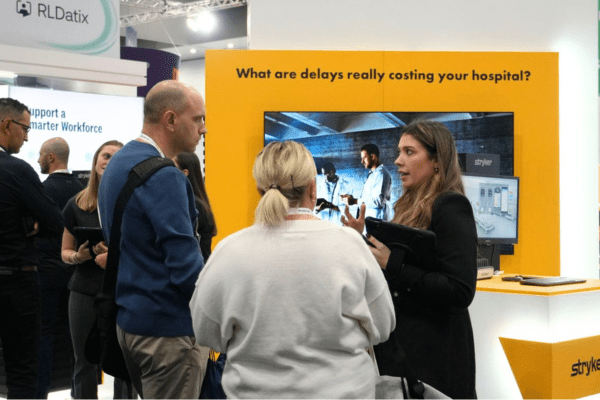
A well-planned layout keeps staff visible and approachable, making it easier for visitors to initiate conversations and for your team to respond.
Your Layout Should Work for Your Team Too
One of the most overlooked aspects of exhibition stand design is how effectively the space supports the people working within it.
Even a visually impressive stand can create challenges if the layout makes it difficult for staff to operate effectively.
Poor layouts often create:
- Congestion around key areas
- Difficulties moving between conversations
- Limited visibility across the stand
- Challenges handing visitors between team members
- Awkward or rushed interactions
A well-considered layout helps your team stay accessible, move confidently throughout the space, and engage visitors more effectively.
The easier the stand is to use, the easier it becomes to deliver a great visitor experience.
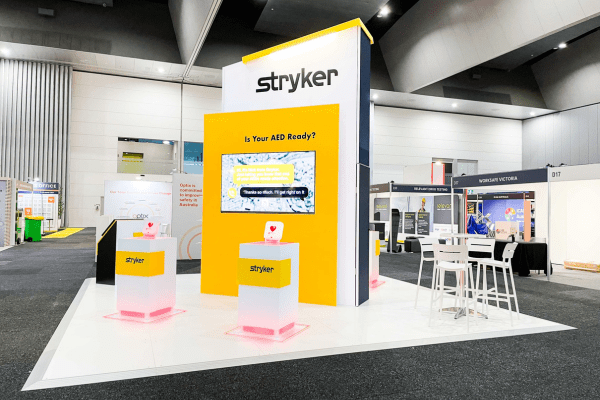
We saw this recently when working with Stryker at Workplace Health and Safety.
During the briefing process, it became clear that the stand needed to support a very different type of conversation. The team weren’t simply showcasing products. Their point of difference was their ability to remotely monitor and manage medical equipment, creating greater visibility and confidence for healthcare providers.
With an island site open on all four sides, the opportunity was to create a space that felt welcoming from every direction while allowing the team to engage visitors naturally throughout the stand.
To help bring their message to life, we incorporated a dynamic lighting feature that represented the flow of data and remote connectivity across their product ecosystem. More importantly, the layout ensured visitors could easily move through the space, interact with the technology, and engage with the team without obstruction.
The result wasn’t just a stand that looked different.
It was a stand designed around how the team needed to operate and how visitors needed to experience the solution.
That’s when layout works best. When the design supports the activity happening within it, rather than competing with it.
Common Exhibition Stand Layout Mistakes
In our experience, layout issues often come down to a few recurring challenges.
No Clear Entry Point
Visitors aren’t sure where to go, so they continue walking past.
Too Much Happening in One Space
Trying to fit every message, product, and activity into a single area can create clutter and confusion.
Blocking Visibility from the Aisle
If visitors can’t quickly understand who you are or what you do, they may never stop long enough to find out.
No Dedicated Space for Conversations
Without suitable areas for engagement, conversations can feel rushed, interrupted, or uncomfortable.
The Cost of Getting Layout Wrong
Layout decisions influence far more than visitor experience.
They can directly impact:
- The number of conversations your team has
- The quality of visitors who engage
- How long people stay on your stand
- Your team’s ability to qualify opportunities
- The overall return from the event
These might seem like small design decisions, but they often influence how effectively your stand performs throughout the event.
Over the duration of the show, when a stand isn’t working well, it often impacts more than visitor engagement.
It affects the team’s energy too.
We’ve all seen it. Team members gradually retreat behind counters, sit down between conversations, or become absorbed in their phones and laptops as foot traffic slows.
That’s not always a people problem.
It can be a sign that the space isn’t supporting the behaviours you want to encourage.
That’s why layout should never be considered after the strategy.
It should support it.
Final Thought
Great exhibition stands don’t just look impressive.
They guide behaviour and make engagement feel natural. By supporting the people using them, they help turn floor traffic into meaningful business conversations.
That’s why layout isn’t simply a design consideration.
It’s actually critical to performance.
Planning Your Next Exhibition Stand?
The most effective exhibition stands are designed around how visitors and teams will actually use the space.
If you’re planning your next event, we can help you create a stand that not only looks the part but supports stronger engagement on the show floor.
Explore our approach to exhibition stand design.


