
Should You Hire or
Own Your Exhibition Stand?
What to consider when deciding between hiring a stand for each event and investing in a reusable exhibition stand.

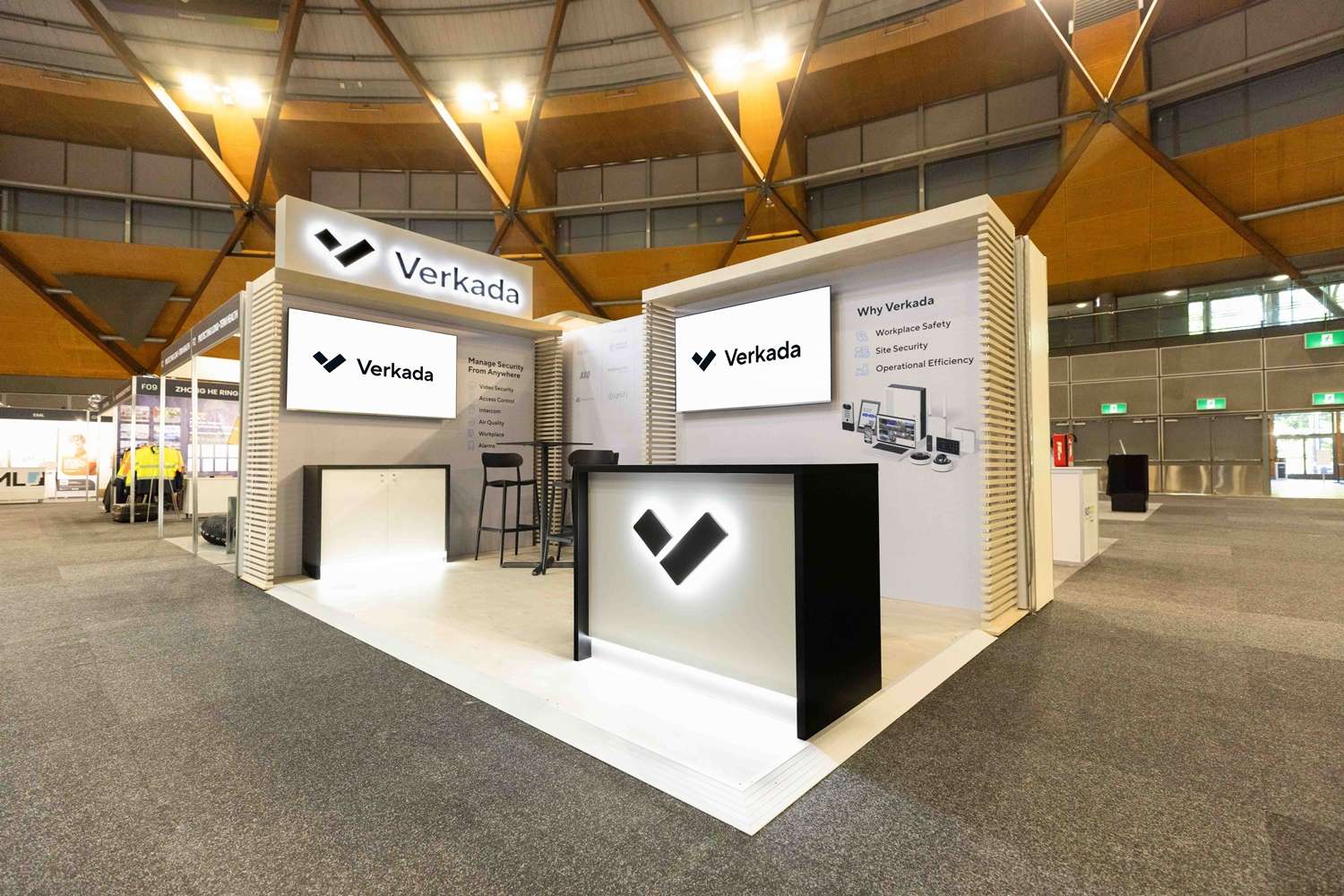
- Hiring can make sense when your exhibition schedule, stand sizes or requirements are unpredictable.
- Ownership becomes worth considering when you exhibit regularly and can reuse a core stand across multiple events.
- A reusable stand does not need to look identical at every event. The structure can stay familiar while messaging, products, AV and engagement elements change.
- True reusability needs to be designed from the start, including different footprints, transport, storage, flooring, power and packaging.
- The useful comparison is not simply the upfront price. Consider cost per wear, internal time, consistency, logistics and the value created across the whole exhibition program.
If you exhibit regularly, there is usually a point where someone asks the question: “Are we better off continuing to hire a stand every time, or should we own something we can reuse?”
It can sound like you’re making a financial decision (and cost is obviously part of it), but you’re not simply deciding whether to hire or buy some walls and counters.
What’s really happening is that you’re making a decision about whether you want to keep treating each exhibition as a separate project, or start thinking about the physical stand as part of a longer-term program.
After decades of designing, building and managing exhibition stands, we’ve found that the more useful answer depends on what your wider exhibition program actually looks like.
When we work through this with a client, we will ask questions like:
- How often do you exhibit?
- Are your stand sizes reasonably consistent?
- Do you exhibit in different cities?
- Does the product focus change?
- How important is presentation quality?
- How much time does your team currently spend reinventing the wheel every time another show appears on the calendar?
Those questions often tell us far more than the budget alone. The answers help us work out where the investment is best made, what needs to stay flexible and where there is no point spending money unnecessarily.
01 Hiring an exhibition stand can make perfect sense
There is nothing inherently better about owning a stand.
Hiring usually makes more sense when your exhibition schedule or requirements are unpredictable. Ownership becomes worth considering when you exhibit regularly and can reuse the same core stand across multiple events.
If you exhibit once a year, have unpredictable stand sizes or are attending an event where the requirements are unlikely to repeat, hiring can be the sensible option. You are using what you need for that event without carrying an asset forward afterwards.
A hire solution can also work well when the stand itself does not need to do anything particularly unusual. Modern exhibition systems can be dressed with graphics, lighting and custom elements, so “hire” does not automatically mean basic.
“Custom” and “modular” are not necessarily opposing choices. A hired stand can include custom elements, a custom-looking stand can be built around modular frames, and an owned stand can use modular thinking so it can be packed down, transported efficiently and reconfigured across multiple events.
That is why we would rarely recommend choosing a solution because someone has labelled it “custom” or “modular”.
This is exactly why we start with how you intend to use the stand, not what construction label should be attached to it.
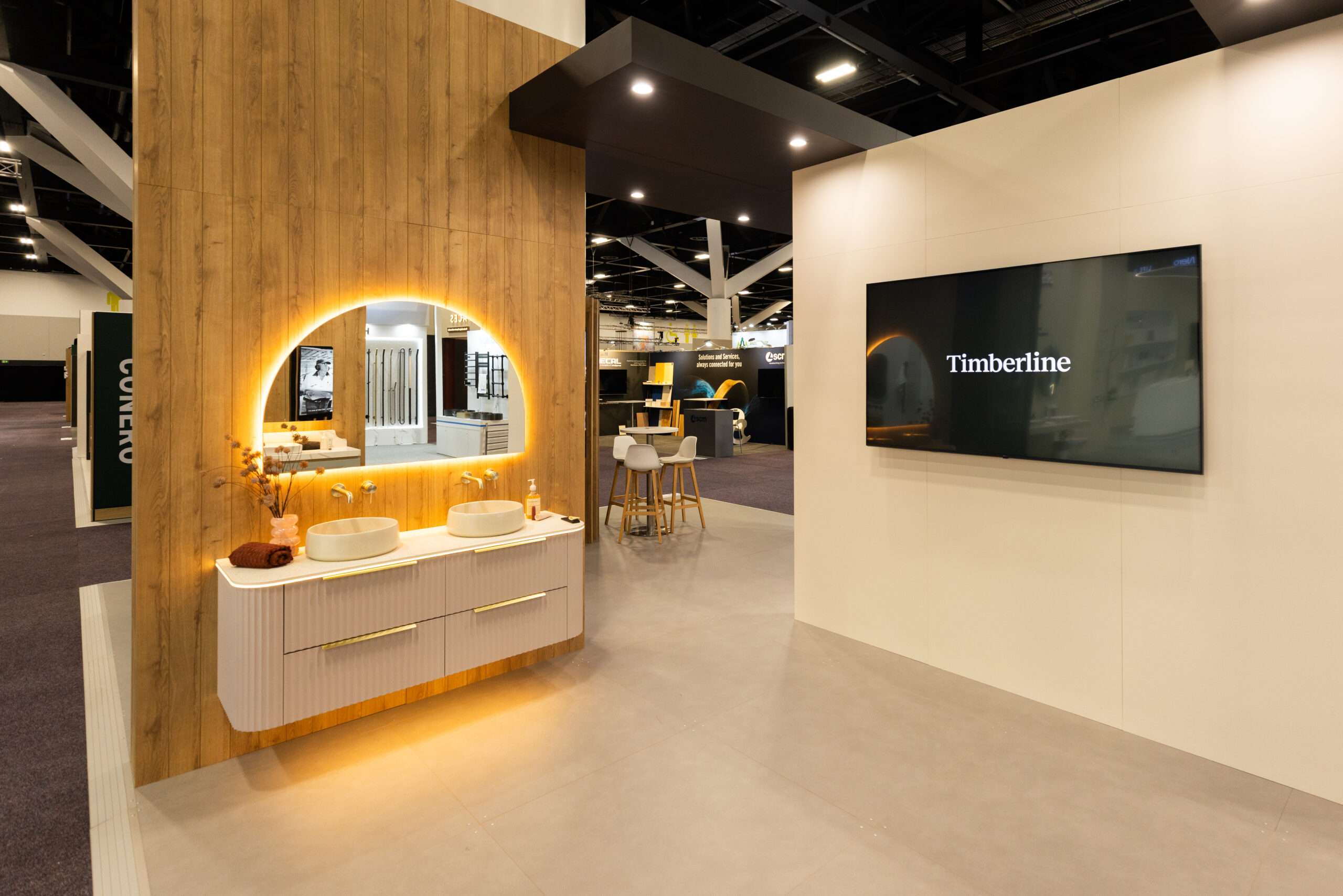
02 When does ownership start becoming worth considering?
The conversation changes when exhibitions become a recurring part of the marketing calendar.
Perhaps you attend four, six or ten shows a year. The footprints are not identical, but there is a pattern. A 6x3 stand here… A 6x6 there… A slightly larger presence at the major industry event.
You want the brand to look consistent and professional, but every time another event comes around, someone is finding a builder, reviewing concepts, selecting furniture, checking colours, approving graphics and worrying about what will turn up onsite.
The true cost of exhibiting is not always the number on the supplier invoice.
At that point, the true cost is not actually appearing on the supplier invoice.
There is also a considerable amount of internal time and headspace being spent recreating something the business has effectively solved before.
We recently had a client whose marketing contact had been designing a new environment for virtually every event.
Every show brought another round of paint colours, furniture selections and design decisions. And because that was what they had always done, the process was never really questioned. None of that internal time appeared in the exhibition budget, but it was absolutely consuming the marketing team’s bandwidth.
By the time the event arrived, too much attention had been consumed by the stand itself and not enough was left for the things that might have had a greater influence on the result: sales outreach, appointments, messaging, team preparation and what would actually happen once visitors arrived.
That hidden cost is easy to miss.
Not sure whether your exhibition calendar supports a reusable stand?
Talk to our team →03 A reusable exhibition stand should not mean “the exact same stand forever”
One objection to ownership is completely understandable: “Won’t people get sick of seeing it?”
They might, if you simply install exactly the same thing year after year without changing anything about it. To be clear, consistency and repetition are not the same thing.
Think about any major retail brand. Its stores remain recognisable because the physical environment follows a clear identity. That familiarity is valuable. What changes are the campaigns, the products, the stories and the reasons to pay attention.
An exhibition stand can work in much the same way.
The structural foundation can (and should) remain familiar while messaging, AV content, demonstrations, products or engagement elements evolve.
When designing something intended for repeated use, the permanent structure can do the branding job without permanently locking every campaign message into it. If next year’s product priority changes, you should not have to rebuild half the stand to tell a different story.
04 The best time to create flexibility is before anything is manufactured
This is one of the biggest differences between owning something reusable and simply keeping an old stand.
A stand does not become properly reusable just because you decide not to throw it away. Reusability needs to be considered from the start if you expect the stand to deliver value across multiple events.
If we know a client’s exhibition calendar ahead of time, we can start thinking about the different footprints they are likely to encounter.
- What works in a 6x6?
- What happens when it becomes a 9x3?
- Which elements need to move?
- Where might power be required?
- What needs to remain consistent and what is likely to change?
Those decisions affect the way components are designed and manufactured. There are plenty of details an exhibitor would never think to ask about, and frankly, there is no reason they should have to.
Flooring is a good example of this. On paper, you might simply calculate how many square metres you need. In reality, different layouts can require different corner pieces or different power access points. You may actually need spare sections because once a hole has been cut for one configuration, that same piece may not suit another.
This is where an experienced stand builder earns their keep, which is why selecting the right partner should never come down to price alone. They are making decisions like this long before you know they matter, and those decisions rarely show up when you are simply comparing quotes and renders.
These are not exciting design decisions, but they are the difference between arriving at the next show with a stand that adapts neatly and arriving with enough material in theory but not the correct pieces to make it work.
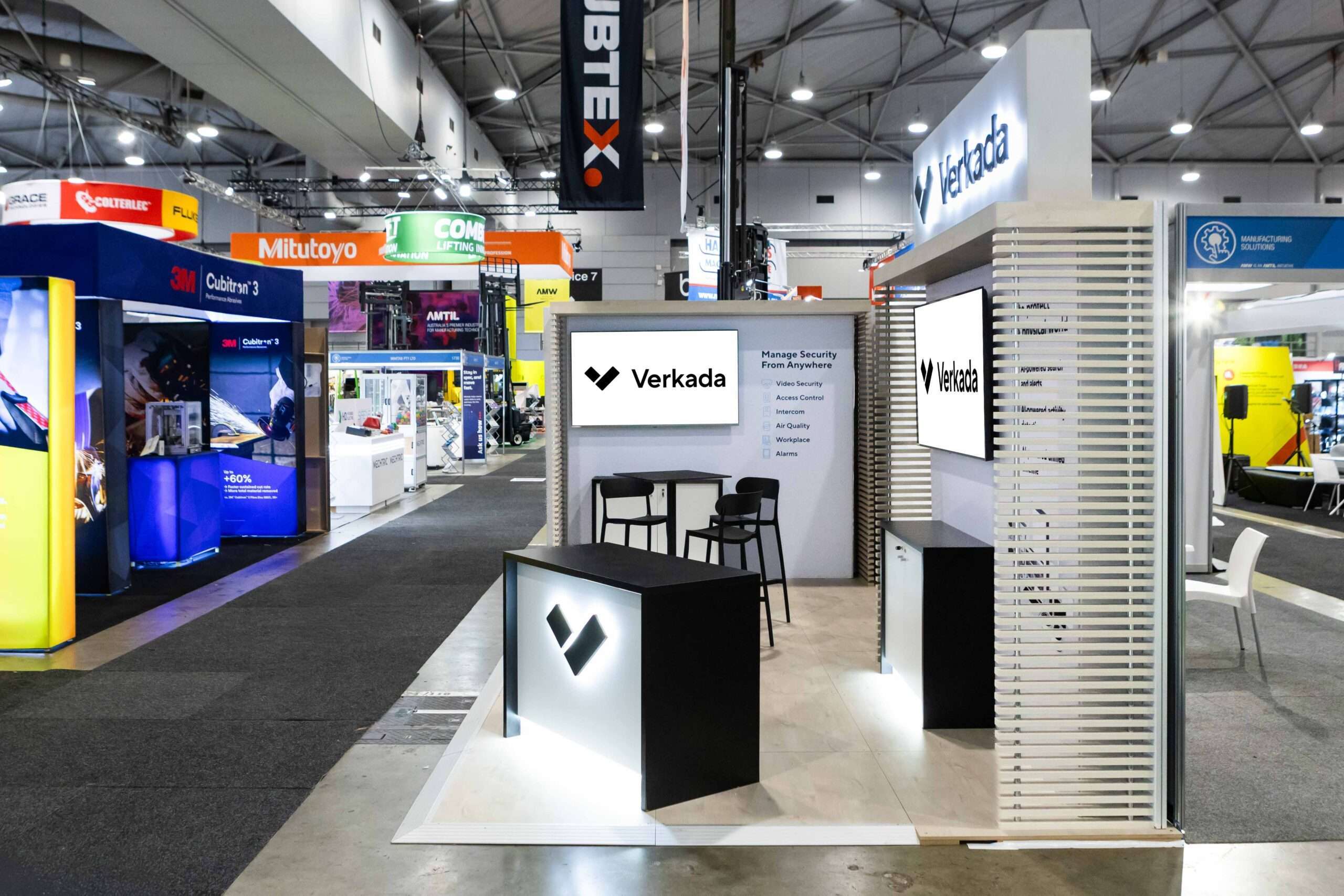
05 What about storage and freight?
This is often the next concern.
If a client has a warehouse, they start imagining the crate taking up space, or they think they can save on storage costs by looking after it themselves.
If a client doesn’t have storage facilities, they often assume storage and transport will blow out the annual budget.
Fortunately, owning the stand does not mean you need to become your own exhibition logistics company. Storage, transport, installation, pack-down and ongoing management can remain with your exhibition stand builder.
For TEC clients, this can actually be the more economical option because we have storage facilities around Australia. Where it makes sense, we can store a client’s crates closer to their next event rather than automatically returning everything to a single base. Because the crates end up doing less kilometres it ends up costing less, but also being more environmentally kind.
The way the stand is designed can make a substantial difference to those costs too.
Older-style custom stands were often transported in very large sections. That meant more storage volume and more freight.
The way we design our reusable stands is so they pack down much more efficiently. There is still a cost to moving and storing the stand, of course. The relevant question is whether those costs stack up against repeatedly recreating and hiring everything across the full exhibition program.
06 Packaging is part of the investment too
This is one of the least glamorous things Chris gets quite opinionated about.
If the stand is expected to earn its keep across multiple uses, protecting it between those uses is part of the investment.
Crates 😜
If we are building a reusable stand, proper packaging is not where we want to save a few dollars. You are expecting this asset to travel through loading docks, trucks, warehouses and exhibition halls repeatedly.
Unintentionally, things do occasionally get bumped. The weather gods don’t always cooperate on bump-in and bump-out days. There is a lot happening onsite. Equipment gets moved, crates get shifted and it only takes one small misjudgment with a forklift to damage something.
There is little point spending more on something built to last and then treating it as disposable every time it travels.
07 How long can a reusable exhibition stand actually last?
There is no responsible answer that says, “Your stand will last exactly X shows.”
We have seen some stands reused many times with very little refurbishment, while others have required more work because of the original construction method, how they were handled or because the business requirements changed.
Flooring generally takes more punishment than structural aluminium frames, while counters, kiosks and other high-touch elements will naturally pick up marks over time.
Sometimes the stand is still physically fine but what the business needs from it is completely different.
Sometimes the reason for revisiting the stand has nothing to do with wear at all. Products evolve. Brands change. The business may simply need something different.
That is why useful life is a better way of thinking about it than simply age.
- Does it still look right?
- Does it still support the team?
- Can it handle the footprints you are now booking?
- Can it accommodate the products or technology you need?
- Does continuing to use it still make commercial sense?
If the answer is yes, there is no prize for replacing it purely because it has reached an arbitrary birthday.
08 Think in terms of cost per wear
Jess affectionately calls this the “cost per wear”. It is the same logic people use with anything they buy for repeated use.
A cheaper option used once may ultimately cost more than something more substantial that performs well repeatedly. That does not mean the expensive option is automatically better.
It just means the initial price needs context.
If you invest more upfront but use the stand successfully across several events, the economics can look very different when viewed across the whole program.
And the value should not only be counted on the physical asset. There is also the brand consistency, reduced design and coordination time, known quality and the team knowing how the environment works.
When the marketing team no longer has to start from a blank page every few months, they can direct that attention somewhere more useful: audience outreach, messaging, team preparation and the event itself.
Those benefits are harder to place neatly into a quote comparison, but they are real.
09 Sometimes hiring is still the smarter choice
None of this is an argument that every regular exhibitor should immediately buy a stand. Sometimes the show schedule is too unpredictable or footprints vary so significantly that trying to force one system across everything would create more compromise than value.
If a brand is expected to change or the business only attends one major event a year, a hired solution may well be the better option.
Sometimes the right answer is a hired frame system with beautifully designed custom elements.
And sometimes it is a reusable custom stand that nobody walking past would ever think of as “modular”.
That is why we believe the construction method should come after the brief. Never before it.
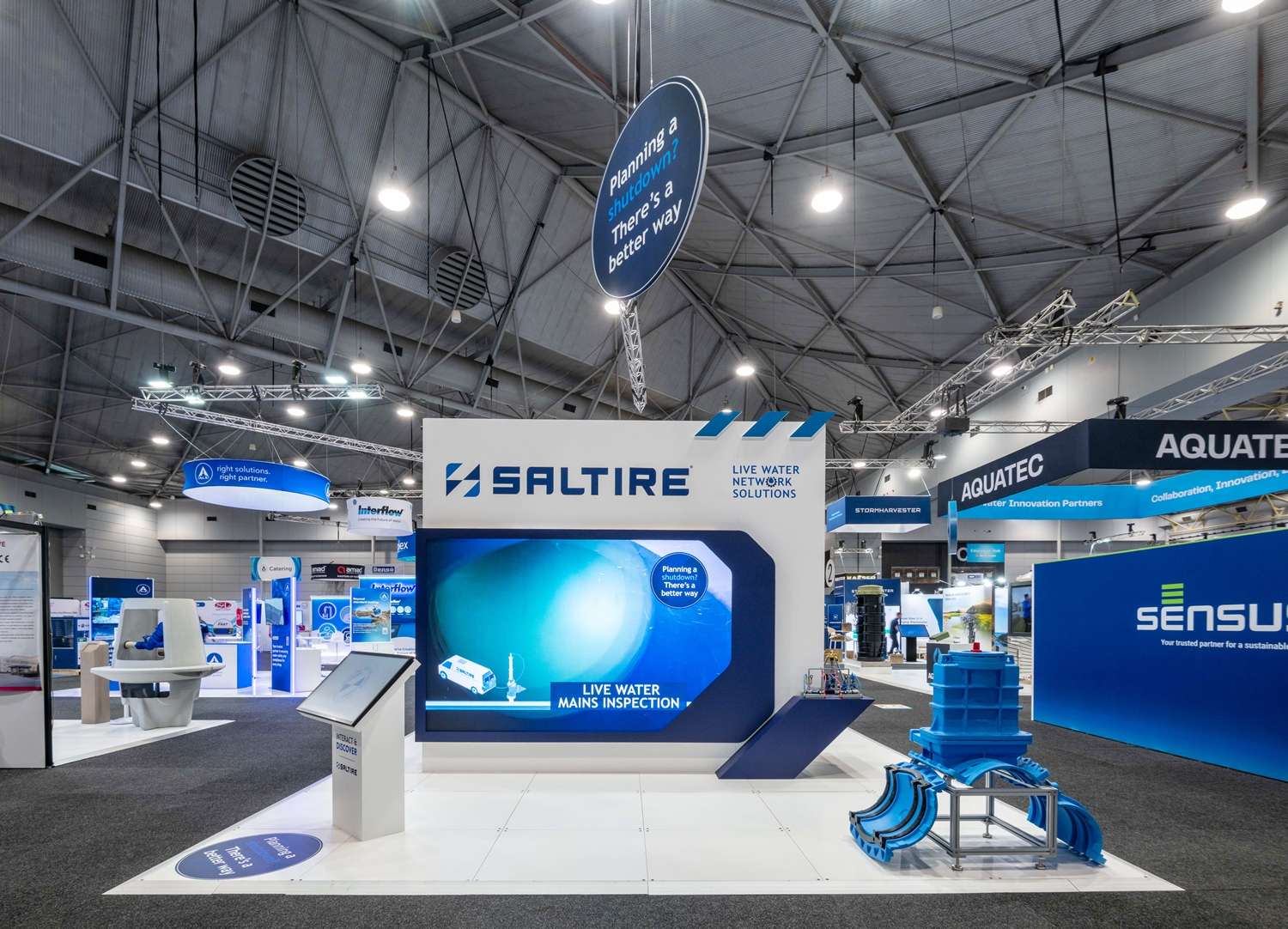
10 The question we would ask instead
If you are deciding whether to keep hiring or invest in a reusable exhibition stand, we would not begin with:
“Which one do you prefer?”
Start by showing your stand builder the full calendar and allow time for them to ask questions so they can truly understand your full requirements.
Once we understand the wider program, the right approach tends to become much clearer. We can make design and construction decisions early that improve the economics later, and remove a fair amount of unnecessary stress along the way.
The goal is not simply to own or hire a stand. It is to make the exhibition investment work harder across the events you actually intend to attend.
Share the events you attend, the likely stand footprints, locations, product priorities and how often the requirements change. That gives your stand builder the context needed to assess hire, ownership or a combination of the two.


